Author: admin

  • Inside Vermont Teddy Bear’s Lifetime Guarantee & Bear Hospital: Exactly How It Works (Even for Secondhand Bears)

    Inside Vermont Teddy Bear’s Lifetime Guarantee & Bear Hospital: Exactly How It Works (Even for Secondhand Bears)

    Guaranteed for Life, Loved for Generations

    At Vermont Teddy Bear, every bear and stuffed animal is backed by an unconditional Lifetime Guarantee. That means if your bear is torn, stained, chewed, or simply worn out from years of love, we will repair or replace it for free.

    This deep dive pulls back the curtain on:

    • What the Vermont Teddy Bear Lifetime Guarantee really covers
    • How to register your bear (including gifts and inherited bears)
    • Step-by-step: how to send in a Vermont Teddy Bear for repair
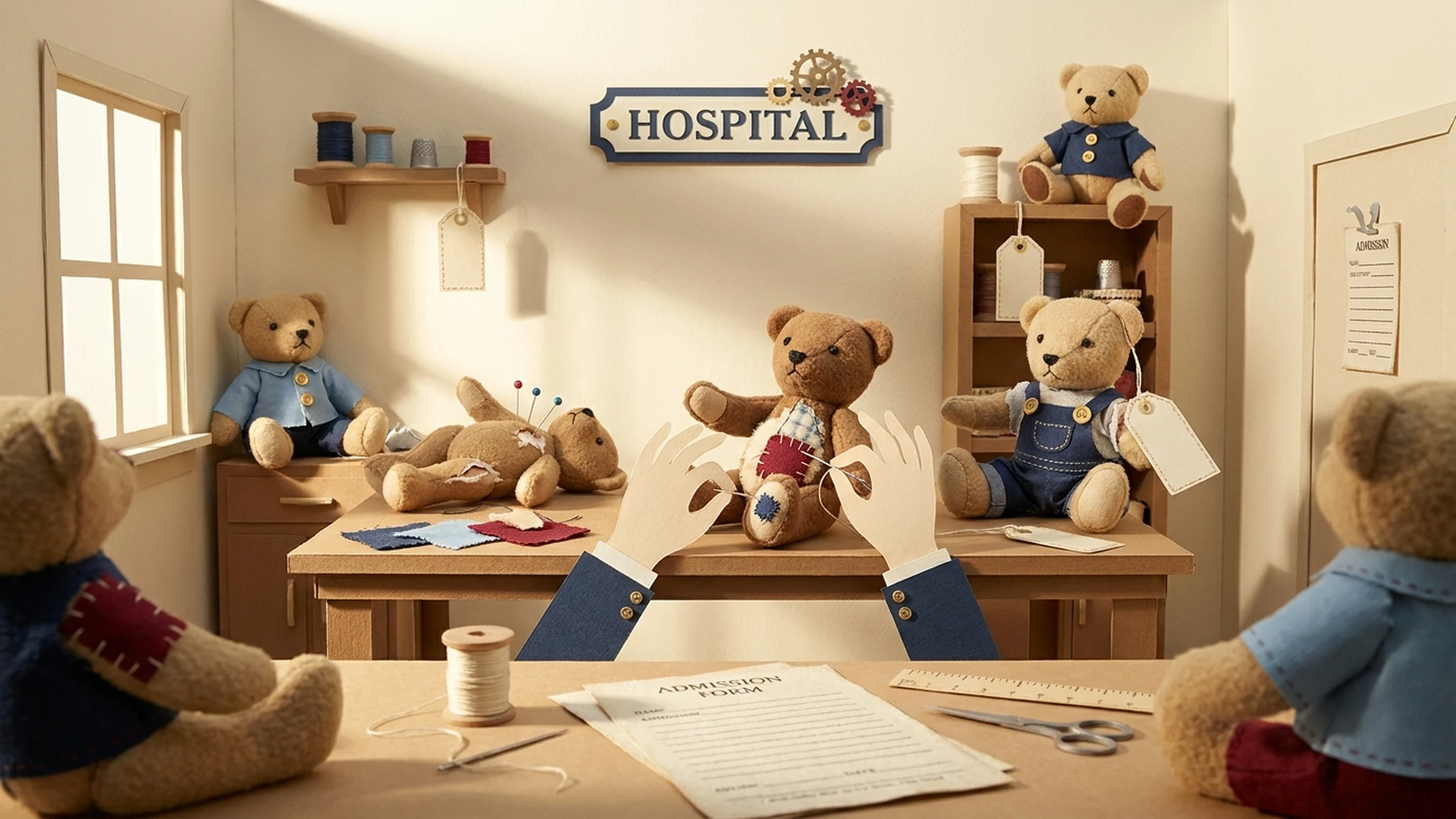
    • What actually happens in our Teddy Bear Hospital in Shelburne, Vermont
    • How the guarantee works for secondhand, thrifted, and passed‑down bears
    • Real before-and-after repair stories and first-person testimonials
    • A quick FAQ section you can scan for fast answers

    What Vermont Teddy Bear’s Lifetime Guarantee Covers

    The Vermont Teddy Bear Lifetime Guarantee is designed so you never have to worry about your bear’s future.

    In plain language, here’s what’s covered:

    • All Vermont Teddy Bear bears and stuffed animals
    • Damage from everyday life and “over-loving,” including:
      • Rips, tears, or seams that have popped
      • Snags or pulled fur
      • Spills and stains from drinks, food, or accidents
      • Puppy teeth and pet damage
      • Flattened stuffing or worn spots from years of hugging
    • Repairs or free replacement if a bear can’t be brought back to health

    Vermont Teddy Bear describes this as an unconditional, unlimited, free lifetime guarantee for the life of the bear—not the life of the owner.

    What’s not covered by the Lifetime Guarantee

    A few things are not included in the lifetime coverage:

    • Outfits and clothing (pajamas, costumes, etc.)
    • Accessories (props, shoes, little extras)
    • Packaging (Bear-gram® boxes, ribbons, etc.)
    • Vermont Mittens and headbands – these have a separate 60-day Love-It Guarantee

    The bear (or stuffed animal) itself is the star of the guarantee. Everything that makes it someone rather than something is what we commit to caring for.


    Do You Have to Register a Bear for the Lifetime Guarantee?

    You don’t have to register a Vermont Teddy Bear to be covered. The guarantee automatically applies to every authentic Vermont Teddy Bear or Vermont Teddy Bear stuffed animal.

    However, registration is helpful because it:

    • Lets our Bear Hospital team match your bear to your contact info more easily
    • Helps if the tag is missing or hard to read
    • Allows you to note special details (name, age, important memories)

    How to register a Vermont Teddy Bear for the Lifetime Guarantee

    1. Visit the Lifetime Guarantee page on vermontteddybear.com.
    2. Look for the registration or guarantee form link.
    3. Fill in a few simple details:
      • Your name and contact information
      • Your bear’s name and approximate age
      • Where/when it was purchased (if you know)
    4. Submit the form. That’s it—your bear’s story is now on file.

    Remember: registration is optional. Even if you bought your bear years ago, or received it as a gift, the Lifetime Guarantee still applies.


    How to Send a Vermont Teddy Bear in for Repair (Step-by-Step)

    When your bear needs help, you don’t need to navigate a complicated warranty claim process. The Bear Hospital admission is intentionally simple.

    Step 1: Print and fill out the Bear Hospital form

    • Go to the Bear Hospital page on vermontteddybear.com.
    • Download and print the Bear Hospital admission form (PDF).
    • Fill it out with:
      • Your name, address, and contact info
      • The bear’s name and age
      • A description of the injury (rips, missing eye, stuffing issue, etc.)
      • Any “allergies” or special notes (for fun, and for real care)
      • Whether you grant permission for “emergency surgery” if needed

    The form’s address confirms where the Bear Hospital lives:

    Vermont Teddy Bear – Bear Hospital
    6655 Shelburne Road, Shelburne, Vermont 05482

    Step 2: Undress and prepare your bear

    Before packing:

    • Remove all outfits and accessories
    • Keep clothing, shoes, and props at home; they’re not needed for surgery
    • If something is attached that you want preserved, note it on the form

    This helps our team focus on the bear’s body, fur, stuffing, and structure.

    Step 3: Pack your bear carefully

    • Use a sturdy box with enough room
    • Wrap the bear in soft material (clean towel, tissue, or other padding)
    • Place the completed admission form inside
    • Seal the box securely and label it clearly

    If you accidentally forget the form, contact Customer Service so they can note your tracking number and watch for your bear’s arrival.

    Step 4: Ship to Shelburne, Vermont

    • Ship your bear to the Shelburne, Vermont address on the form
    • Choose a service with tracking, so you can follow your bear’s journey

    You pay for shipping to the hospital; Vermont Teddy Bear covers the repair and the bear’s trip back home.

    Step 5: Repair timing – how long does it take?

    Depending on the injury and volume of patients, Vermont Teddy Bear lists repair times in two ways:

    • About 3–4 weeks on the Bear Hospital page and hospital form
    • 2–6 weeks in the general customer service FAQ

    To be safe, plan for 2–6 weeks from arrival for assessment, surgery, recovery, and the journey home.


    What Happens Inside the Teddy Bear Hospital

    Once your bear arrives in Shelburne, it’s not just “processed like a product.” It’s admitted as a patient.

    Triage & check-in

    • The Bear Hospital team logs your bear and matches it with your admission form
    • They check for:
      • Fur type and color
      • Stuffing level (too flat? lumpy?)
      • Structural issues (joints, seams, internal stitching)
      • Missing features (eyes, nose, paw pads)

    Dr. Pam, our resident “bear doctor,” has over 25 years of experience caring for well-loved Vermont Teddy Bears and stuffed animals.

    “Surgery” and repair

    Repairs are done by craftspeople with “amazing seamstress skill”—that’s how the brand itself describes the work.

    Depending on the injury, surgery may include:

    • Restitching seams so they’re secure but still hug-soft
    • Replacing or resecuring eyes and noses
    • Rebuilding paw pads or worn areas
    • Adding, removing, or redistributing stuffing for the right feel
    • Spot-treating stains or replacing damaged fur panels

    If the damage is too extensive to repair safely, the team will:

    • Reach out to discuss options
    • If needed, provide a replacement bear of equal value, free of charge
    • When original fur colors or designs are discontinued, they’ll match as closely as possible and explain any differences

    Recovery & “physical therapy”

    After surgery, every bear goes through a kind of physical therapy:

    • Fur is gently brushed and fluffed
    • Stuffing is smoothed so hugs feel even and cozy
    • Final quality checks ensure stitches, joints, and seams are strong

    Only when the team is fully satisfied does your bear receive a clean bill of health and head home.


    Real Stories: Before & After Lifetime Guarantee Repairs

    Below are sample "before and after" moments that mirror what many customers share with us. These illustrate the kinds of transformations our Bear Hospital team makes possible.

    “My son’s bear, ‘Mr. Snuggles,’ was 18 years old and had survived college, two apartments, and one very curious puppy. When the ear finally gave out, I panicked. We sent him to the Bear Hospital, and four weeks later he came back with both ears perfectly attached, fur fluffed, and still looking like our Mr. Snuggles. It honestly made me tear up.”
    Elena R., Vermont Teddy Bear owner for 18 years

    “I found a Vermont Teddy Bear at a thrift store, totally flattened and missing an eye, but I could tell he had good bones. I learned the lifetime guarantee applied even to secondhand bears and sent him in. When he came back, my kids couldn’t believe it was the same bear. He went from ‘sad and floppy’ to ‘proud big brother bear’ in about a month.”
    Marcus T., proud secondhand bear adopter

    “Our daughter’s ‘Dr. Bear’ went through a house move, a spilled smoothie, and a very rough patch during her hospital stay. When the seams started opening, we knew we had to get help. Vermont Teddy Bear’s team repaired his seams, refreshed his stuffing, and even cleaned up the smoothie stains. Now he’s right back by her side at every doctor appointment.”
    Lisa and Dan M., parents of a long-time bear patient

    We encourage customers to snap before-and-after repair photos for their own memories. If you share them online, tag Vermont Teddy Bear so other families can see what’s possible with a truly repairable heirloom teddy bear.


    How Secondhand, Thrifted, or Inherited Bears Are Treated

    One of the most unique parts of the Vermont Teddy Bear Lifetime Guarantee is how it treats secondhand and passed-down bears.

    Does the Lifetime Guarantee cover secondhand purchases?

    Yes. Vermont Teddy Bear explicitly states that the guarantee applies even if your bear was purchased from:

    • Third-party retailers
    • Thrift stores
    • Resale shops

    If it’s a genuine Vermont Teddy Bear or Vermont Teddy Bear plush, it’s covered—no receipt required.

    What about inherited bears passed down to a new generation?

    The guarantee is tied to the bear, not the original buyer. That means:

    • If you inherit a Vermont Teddy Bear from a parent, grandparent, or friend, the Lifetime Guarantee follows the bear
    • You can send it in to the Bear Hospital just as if you’d bought it yesterday

    This policy is a big part of Vermont Teddy Bear’s broader philosophy: love should last a lifetime—and then some.


    Why a Lifetime Guarantee Matters in a Disposable World

    Most plush brands focus on being cute, customizable, or trendy. Vermont Teddy Bear leans into something different: repairability, continuity, and emotional permanence.

    • Many big-box plush toys have no repair program and a limited returns window
    • Vermont Teddy Bear offers what it describes as “the only unconditional lifetime guarantee in the stuffed-animal industry” (a brand claim that underscores how rare this level of commitment is)
    • Combined with 100% recycled plastic-bottle stuffing and classic, non-fad designs, the guarantee turns each bear into a real heirloom gift—not just a toy

    For gifters, this means you’re not just sending something cute; you’re sending a promise.


    FAQs: Vermont Teddy Bear Lifetime Guarantee & Bear Hospital

    1. What does Vermont Teddy Bear’s Lifetime Guarantee cover?

    The Lifetime Guarantee covers all Vermont Teddy Bear bears and stuffed animals against damage from everyday life—rips, tears, snags, spills, puppy teeth, and “over-loving.” If your plush can be repaired, the Bear Hospital will fix it. If it can’t, Vermont Teddy Bear will replace it with a bear of equal value, free of charge.

    2. Does the Lifetime Guarantee cover secondhand or inherited bears?

    Yes. The guarantee explicitly applies to bears bought from third-party retailers, thrift stores, and resale shops, and it follows the bear when passed down to a new generation. As long as it’s an authentic Vermont Teddy Bear plush, it’s covered, whether you are the first owner or the fifth.

    3. How do I send in a Vermont Teddy Bear for repair?

    To send in a bear:

    1. Go to the Bear Hospital page and print the admission form.
    2. Fill it out with your contact info, your bear’s name and age, and a description of the damage.
    3. Remove all clothing and accessories from your bear.
    4. Pack the bear carefully in a sturdy box with padding and include the form.
    5. Ship it to Vermont Teddy Bear – Bear Hospital, 6655 Shelburne Road, Shelburne, Vermont 05482 using a trackable service.

    The hospital will handle assessment, surgery, and return shipping once your bear is healed.

    4. How long do Vermont Teddy Bear repairs take?

    Repair time typically runs about 3–4 weeks, but the broader customer service FAQ advises allowing 2–6 weeks depending on the bear’s injuries and how many patients are in the hospital. If you’re planning around a special date (like a birthday or holiday), send your bear in as early as possible.

    5. Is there any cost to repair a Vermont Teddy Bear under the guarantee?

    No. Repairs and, if necessary, replacement are free under the Lifetime Guarantee. You are responsible only for shipping the bear to the hospital. Vermont Teddy Bear covers the repair work and return shipping.

    6. What if my bear’s original fur color or style is discontinued?

    If a bear’s exact design or fur color has been discontinued, the Bear Hospital team will contact you. In some cases, they may:

    • Repair the existing bear using compatible materials, or
    • Offer a newer bear of equal value as a replacement, explaining any differences so there are no surprises when your bear comes home.

    Bring Your Bear Home to Health

    If you’ve been holding onto a beloved bear with:

    • A loose seam or missing eye
    • A mysterious stain you’ve tried (and failed) to remove
    • Fur worn thin from years of comfort

    …your bear doesn’t have to stay in the “too fragile to cuddle” category.

    With Vermont Teddy Bear’s unconditional Lifetime Guarantee and the skilled hands at the Teddy Bear Hospital in Shelburne, Vermont, you can hug your memories again—safely and often.

    Visit the Lifetime Guarantee and Bear Hospital pages on vermontteddybear.com to admit your patient and let our Bear Crew take it from there.


    Suggested "Before & After" Photo Ideas for Your Own Memories

    If you’d like to document your bear’s journey:

    • Take a “before” photo of your bear’s injuries at home
    • Snap a photo of the admission form and packed box
    • Capture the moment your bear returns (often with that first big hug)
    • Take a close-up “after” photo of repaired seams, refreshed fur, and restored features

    Sharing these photos with family—or on social media—helps tell the story of a repairable heirloom teddy bear that really is built to be loved forever.

  • Heirloom Teddy Bear Craftsmanship vs. Mass‑Produced Plush: How to Spot a Bear That Will Last a Lifetime

    Why Some Teddy Bears Become Heirlooms (and Others Don’t)

    Not all teddy bears are created equal.

    Some are meant to be hugged hard for decades, passed down, and even repaired. Others are designed to be cute, affordable, and—if we’re honest—a little disposable.

    This guide breaks down the craftsmanship behind heirloom-quality teddy bears versus typical mass‑produced plush.

    We’ll use Vermont Teddy Bear as a real‑world example of premium standards, while giving you a neutral checklist you can use to evaluate any bear, from boutique brands to big‑box options.


    Heirloom Teddy Bears vs. Mass‑Produced Plush: Big Picture

    Before we zoom into joints and stitches, it helps to define the two ends of the spectrum.

    What is an “heirloom-quality” teddy bear?

    Heirloom teddy bears are designed to be:

    • Durable enough to last for decades of love and play
    • Repairable, not disposable
    • Made with high‑quality materials and human craftsmanship
    • Often jointed, with classic silhouettes and timeless styling

    Examples:

    • Vermont Teddy Bear classic jointed bears (handmade in Vermont since 1981)
    • High‑end collector brands like Steiff with mohair, 5‑way jointing, and limited editions

    What is “mass‑produced plush”?

    Mass‑market plush focuses on:

    • Scale and price: millions of units, low to mid price points
    • Licensing and trends: characters, seasonal fads
    • Convenience: widely available, often in big‑box stores

    Examples:

    • Build‑A‑Bear Workshop (650+ locations across 30+ countries, $529.8M in 2025 revenue)
    • Ty Beanie Boos (around $5.99, surface‑clean only)
    • GUND and Aurora as “premium mass‑market” middle ground

    Both categories can be fun and safe, but they’re built for different lifespans.


    1. Jointing: How a Bear Moves (and Why It Matters)

    What is jointing in teddy bears?

    Jointing refers to how a bear’s limbs and head are attached.

    • 5‑way jointed: head, arms, and legs rotate
    • Partially jointed: maybe arms move, legs don’t
    • Unjointed: limbs and head are sewn in place

    Heirloom approach

    Heirloom brands often use disk and pin joints inside the bear.

    • Vermont Teddy Bear’s classic line is jointed so arms and legs can move
    • Steiff’s traditional bears are often 5‑way jointed and marketed to adult collectors

    Why it matters:

    • Joints make bears poseable and more expressive
    • Properly built joints can be repaired or replaced later

    Mass‑produced approach

    Most inexpensive plush toys are unjointed.

    • Limbs and head are sewn into a fixed position
    • Manufacturing is faster and cheaper
    • Once seams or attachments fail, the toy is often thrown away instead of repaired

    Jointing checklist (for any bear)

    Ask:

    • Is the bear jointed or unjointed?
    • If jointed, do limbs move smoothly without wobbling or crunching sounds?
    • When you gently tug on an arm or leg, does it feel secure, not loose or flimsy?

    If jointing feels sloppy out of the box, it won’t improve with time.


    2. Stitching: The Invisible (But Critical) Details

    Why stitching quality is your first durability test

    The U.S. Consumer Product Safety Commission (CPSC) requires that stuffed toys pass seam testing so they don’t rip open under stress.

    Heirloom makers go beyond minimums—because they expect their bears to be:

    • Hugged hard
    • Dragged around
    • Slept on
    • Occasionally caught in doors, strollers, and suitcases

    Heirloom stitching standards

    Look for:

    • Tight, even stitches around seams
    • Reinforced stress points (neck, underarms, seat, base of ears)
    • Hand‑finished areas like noses, mouths, and paws

    Vermont Teddy Bear, for example:

    • Says its classic bears are cut, sewn, stuffed, and stitched in Shelburne, Vermont by about 170 year‑round employees
    • Uses hand‑sewn finishing to close seams and attach details

    These details make bears easier to repair and less likely to split.

    Mass‑produced stitching

    Mass‑market plush often uses:

    • High‑speed machine stitching
    • Wider stitch spacing
    • Less reinforcement in hidden areas

    This isn’t automatically bad—but it can mean:

    • Seams are more likely to pop with rough play
    • Repairs are harder because fabric may fray around weaker stitching

    Stitching checklist

    Examine any bear up close:

    • Are seams straight, tight, and consistent?
    • Can you see gaps where stuffing could work its way out?
    • Are facial features and paw pads securely attached, with no loose threads?

    If seams look sloppy in the store, expect problems at home.


    3. Stuffing: What’s Inside Your Bear

    What are teddy bears usually stuffed with?

    Most modern plush is filled with polyester fiberfill.

    • Build‑A‑Bear, for example, uses high‑grade polyester fiber stuffing
    • Ty and many big‑box brands do the same

    The differences come down to:

    • Type and density of filling
    • Sustainability of materials
    • How the stuffing is distributed and secured

    Heirloom stuffing and sustainability

    Heirloom‑quality bears aim for balanced weight and structure, not just fluffiness.

    Vermont Teddy Bear, for instance:

    • Uses 100% recycled plastic bottle stuffing
    • Says each plush saves an average of 27 plastic bottles from landfills (a 15" bear typically saves about 26 bottles)
    • Stuffing is handled by trained staff in Vermont, so bears feel consistently firm yet huggable

    Stuffing that’s carefully placed and compacted helps bears:

    • Hold their shape over time
    • Stand or sit more reliably
    • Avoid lumpy, sagging areas

    Mass‑produced stuffing

    At lower price points, you’ll often find:

    • Looser, less dense stuffing that flattens quickly
    • Inconsistently filled arms/legs
    • Bean bags or pellets in paws or bodies for weight, sometimes in thin internal pouches

    These toys can feel very soft at first but may lose structure quickly.

    Stuffing checklist

    Squeeze and flex the bear:

    • Does the body feel evenly stuffed, without big lumps or hollow spots?
    • Do limbs feel substantial, not empty or flimsy?
    • After you squeeze, does the bear spring back or stay crushed?

    Ask brands directly:

    • What is the bear stuffed with?
    • Is the stuffing recycled or virgin material?
    • Is it safe to wash, and will the stuffing clump?

    4. Fabric Quality: Fur, Noses, Eyes, and Paws

    Key differences in materials between premium and cheap teddy bears

    The outer fabric determines how a bear feels today—and how it will look in ten years.

    Common materials:

    • Synthetic plush fabrics: widely used from budget to premium
    • Mohair and natural fibers: common in top artisanal heirloom teddy bear makers, especially for adult collectibles

    Steiff, for example, highlights 49% mohair / 51% cotton for some classic bears, with collector pieces often priced around $198–$400.

    Heirloom fabric choices

    Heirloom bears usually use:

    • Dense plush or mohair that resists matting
    • Quality safety eyes that are securely anchored
    • Sturdy paw pad materials (like faux suede) that can handle wear

    Vermont Teddy Bear focuses on:

    • Soft but durable fur designed to stay plush over years of hugs
    • Eyes and joints that are made in the USA for its classic line
    • Fabric choices that pair well with lifetime repairability

    Mass‑produced fabric choices

    Budget plush may use:

    • Thinner, ultra‑soft fabrics that mat or bald over time
    • Lower‑grade plastic eyes and noses that can scratch or loosen
    • Paw pads made from fabric that pills or frays quickly

    This can be fine for short‑term use, but it’s not ideal for a future heirloom.

    Fabric quality checklist

    Run your hands over the bear and look closely:

    • Does the fur feel substantial, or does the backing show when you brush it?
    • Are there bald patches, snags, or loose fibers out of the box?
    • Are eyes and noses firmly attached, with no wiggle if you gently press them?
    • Do paw pads feel thick and well‑stitched, not thin or papery?

    If the bear already looks worn brand‑new, it won’t age gracefully.


    5. Repairability and Guarantees: The True Heirloom Test

    Why repairability is the biggest difference of all

    A bear only becomes an heirloom if someone is willing—and able—to fix it.

    This is where many premium traditional teddy bear brands separate themselves from cheaper Amazon teddy bear brands and big‑box plush.

    Vermont Teddy Bear’s Lifetime Guarantee and Bear Hospital

    Vermont Teddy Bear is one of the few teddy bear companies to offer a lifetime guarantee on its bears and stuffed animals.

    Key points:

    • Coverage: All Vermont Teddy Bear plush are guaranteed for life
    • What’s included: Bears and stuffed animals themselves
    • What’s excluded: Outfits, accessories, packaging, and Vermont Mittens
    • Transferability: The guarantee follows the bear, even if it’s gifted or bought second‑hand, as long as it was originally made by Vermont Teddy Bear

    If a bear is damaged:

    • It can be sent to the Teddy Bear Hospital in Vermont
    • Trained staff (including “Dr. Pam,” with 25+ years of repair experience) assess injuries
    • They perform “surgery” to repair; if beyond repair, they may replace the bear
    • Typical turnaround is about 3–4 weeks, reflecting the hands‑on seamstress work

    This level of repair service is extremely rare in plush.

    Other brands and repair policies

    • Many mass‑market brands (including Build‑A‑Bear, Ty, and most Amazon sellers) focus on quality control and safety, not lifetime repair
    • Some may offer short‑term returns or replacements, but not long‑term restoration years later

    This doesn’t make them “bad” toys—just different tools for different jobs.

    Repairability checklist

    Ask any brand you’re considering:

    • Does this teddy bear or plush toy come with a lifetime guarantee?
    • If the bear is damaged years later, can it be repaired, or would I need to buy a new one?
    • Is there a specific repair service or “hospital” for damaged plush?

    If you want a bear that can stay in the family, prioritize companies that clearly explain their repair and replacement process.


    6. Price and Value: What Are You Really Paying For?

    Teddy bears exist at almost every price point. Here’s how pricing often lines up with craftsmanship.

    • Budget plush (around $5–$20)
      Example: Ty Beanie Boo at $5.99, surface‑clean only
      Best for: party favors, short‑term trends, light use

    • Premium mass‑market (around $15–$60)
      Examples: many GUND and Aurora bears (Aurora White Bear at $14.39)
      Best for: everyday gifts where you want softness and decent durability

    • Heirloom and collector bears (around $60–$300+)
      Examples:

      • Vermont Teddy Bear classic 15" bears around $70, with accessorized versions $70–$120
      • Giant Vermont Teddy Bears up to $295 for a 6‑foot bear
      • Steiff collector bears around $198–$400

    You’re paying for:

    • Human craftsmanship (cutting, sewing, jointing, detailing)
    • Better materials (denser fur, jointed construction)
    • Repairability and guarantees (like Vermont’s lifetime coverage)
    • Smaller‑scale or local production, often with fair wages

    When comparing Vermont Teddy Bear vs cheaper Amazon teddy bear brands, remember you’re not just comparing bears—you’re comparing bears plus decades of backup.


    7. Neutral Quality Checklist: How to Evaluate Any Teddy Bear

    Use this buyer’s checklist next time you’re comparing top artisanal heirloom teddy bear makers, Vermont Teddy Bear, Build‑A‑Bear, or a no‑name online brand.

    A. Construction & Movement

    • [ ] Is the bear jointed (head/arms/legs move) or unjointed?
    • [ ] Do joints, if present, feel smooth and secure?
    • [ ] Are limbs attached symmetrically and firmly?

    B. Stitching & Seams

    • [ ] Are seam stitches tight, even, and straight?
    • [ ] Are high‑stress points (neck, underarms, seat) reinforced?
    • [ ] Any loose threads or small gaps where stuffing peeks through?

    C. Stuffing & Shape

    • [ ] Is the bear evenly stuffed, with no hollow or over‑packed areas?
    • [ ] Does it spring back after being squeezed?
    • [ ] Does the brand disclose what the stuffing is made from (recycled, polyester, etc.)?

    D. Fabric & Components

    • [ ] Does the fur feel dense and sturdy, not thin or patchy?
    • [ ] Are eyes and noses firmly secured and safety‑rated?
    • [ ] Do paw pads feel thick and well‑attached?

    E. Safety & Care

    • [ ] Is the bear clearly labeled with age grading and care instructions?
    • [ ] Can it be machine washed (if that’s important to you), or is it surface‑clean only?
    • [ ] Does the brand reference ASTM F963 or similar toy safety standards?

    F. Repairability & Guarantee

    • [ ] Does the brand offer a lifetime guarantee or long‑term warranty?
    • [ ] Is there a teddy bear hospital or repair service?
    • [ ] Are guarantee details (what’s covered vs. excluded) clearly explained?

    If you can check most of these boxes—especially in the repair and guarantee section—you’re likely looking at a truly heirloom‑quality teddy bear.


    FAQ: Choosing High‑Quality, Heirloom‑Quality Teddy Bears

    1. What makes a high‑quality teddy bear vs. a cheap teddy bear?

    A high‑quality teddy bear usually has:

    • Strong, even stitching and reinforced seams
    • Dense, durable fabric and secure safety eyes/nose
    • Well‑distributed stuffing that holds its shape
    • A clear safety label and care instructions
    • Ideally, a repair or guarantee policy, like Vermont Teddy Bear’s lifetime guarantee

    Cheap teddy bears often cut corners on stitching, filling, and fabric, making them more prone to splitting, matting, or flattening.

    2. How does Vermont Teddy Bear quality compare to Build‑A‑Bear?

    Both companies make safe, well‑loved plush toys, but their focus differs.

    • Build‑A‑Bear emphasizes the in‑store experience, character licensing, and customization, using high‑grade polyester stuffing and third‑party safety testing.
    • Vermont Teddy Bear emphasizes heirloom construction, made‑in‑Vermont classic jointed bears, 100% recycled stuffing, and a lifetime guarantee with a Teddy Bear Hospital.

    If you want a plush that’s part of a fun outing, Build‑A‑Bear is great. If you want a repairable heirloom teddy bear with a long‑term guarantee, Vermont Teddy Bear leans more in that direction.

    3. What does Vermont Teddy Bear’s lifetime guarantee exactly cover?

    Vermont Teddy Bear’s Lifetime Guarantee covers:

    • All Vermont Teddy Bear bears and stuffed animals for life
    • Repairs at the Teddy Bear Hospital or, if a bear can’t be fixed, a replacement

    It does not cover:

    • Outfits
    • Accessories
    • Packaging
    • Vermont Mittens

    The guarantee generally follows the bear itself, even if it changes owners, as long as it’s an authentic Vermont Teddy Bear.

    4. Are there other stuffed animal brands with lifetime guarantees?

    Lifetime guarantees on plush are rare.

    Some outdoor‑gear brands offer lifetime warranties on bags or clothing, but for stuffed animals, Vermont Teddy Bear is one of the best‑known companies with a formal lifetime guarantee plus a dedicated repair hospital.

    Other teddy bear makers may offer limited warranties or repair services, but they’re usually time‑bound or focused on higher‑priced collector pieces.

    5. How can I spot poor quality in cheap plush teddy bears quickly?

    Do a 60‑second check:

    • Tug gently on limbs and ears—do they feel loose?
    • Inspect seams—any gaps, uneven stitches, or loose threads?
    • Squeeze the body—does it feel lumpy or under‑stuffed?
    • Look at the fur—does the backing show through when you stroke it?
    • Check the label—are care instructions and safety information clear and specific?

    If the bear fails several of these quick checks, it’s probably more disposable than heirloom.


    Bringing It All Together

    When you understand jointing, stitching, stuffing, fabric quality, and repairability, the difference between heirloom teddy bears and disposable plush becomes obvious.

    Use the checklist in this guide whether you’re shopping Vermont Teddy Bear, other collectible heirloom teddy bear brands, or comparing Vermont Teddy Bear vs cheaper Amazon teddy bear brands.

    If you’re searching for a bear that can comfort a child today and still be around decades from now, look for:

    • Careful craftsmanship you can see and feel
    • Thoughtful materials, inside and out
    • A brand that promises to stand behind the bear for life

    That combination is what turns a simple stuffed animal into a forever friend.

  • How to Choose the Perfect Vermont Teddy Bear: Sizes, Prices, Personalization, and Lifetime Guarantee Explained

    The Complete Vermont Teddy Bear Buying Guide

    Choosing the right Vermont Teddy Bear is less about shopping and more about storytelling. This guide walks you step‑by‑step through sizes, prices, fabrics, outfits, personalization, occasion‑based picks, and how the Lifetime Guarantee really works.

    Use it as your flagship reference whether you’re buying for a child, partner, friend, or yourself.


    Step 1: Start With Size – From 11" to 6 Feet

    Vermont Teddy Bear sizes are grouped by how they’re used: newborn keepsakes, classic heirlooms, comfort plush, and giant “wow” bears.

    Core size options and typical prices

    • 11" New Baby Bears & Loveys

      • Size: 11" bears; lovey blankets ~11" x 14"
      • Price:
        • 11" New Baby Bear: $39.99
        • Baby Lovey Security Blanket: $20
      • Best for: Newborns, toddlers, diaper‑bag or stroller companions
    • 15" Classic Bears (Handmade in Vermont)

      • Size: 15" full height, ~11" seated
      • Price:
        • 15" Classic Teddy Bear: $70
        • 15" themed classics (e.g., Christmas Classic): around $80+
      • Best for: Heirloom gifts, birthdays, anniversaries, holidays, collectors
    • 18–20" Comfort Plush Bears

      • 18" Oh So Soft Teddy Bear
        • Size: 18" full, 13" seated
        • Price: $46
      • 20" World’s Coziest Bear
        • Size: 20" full, 14" seated
        • Price: $60
      • Best for: Everyday cuddling, self‑care, get‑well, sympathy
    • 13" Weighted Bears

      • Size: 13" full, 9" seated, about 3 lb
      • Price: $45
      • Best for: Teens and adults needing calming, sensory comfort; grief support
    • Giant Bears (Statement Gifts)

      • 4‑ft Big Hunka Love Bear: $100
      • 6‑ft Giant Hunka Love Bear: $300 (72" tall, 49" seated)
      • Best for: Major romantic gestures, milestone birthdays, over‑the‑top surprises

    Here’s a quick size–price snapshot.

    Quick Size Decision Tree

    Ask yourself two questions: Who is this for? and How will they use it?

    1. Is this for a baby or toddler?

      • Yes → Choose:
        • 11" New Baby Bear, Baby Lovey, or Cuddle Buddies Gift Set
      • No → Go to 2.
    2. Is this meant as a forever keepsake (heirloom)?

      • Yes → Choose:
        • 15" Classic Teddy Bear (handmade, jointed, highly customizable)
      • No → Go to 3.
    3. Is comfort/self‑care the main goal (stress, anxiety, grief)?

      • Yes → Choose:
        • 13" Weighted Bear (for grounding)
        • 18" Oh So Soft or 20" World’s Coziest (for bedtime cuddles)
      • No → Go to 4.
    4. Is this a big, over‑the‑top surprise?

      • Yes → Choose:
        • 4‑ft Big Hunka Love or 6‑ft Giant Hunka Love Bear
      • No →
        • 15" Classic or 18" Oh So Soft are the best versatile picks for most adults and kids.

    Step 2: Understand Fabrics, Feel, and Quality

    All Vermont Teddy Bear plush is designed for long‑term hugging, but each line has a distinct feel.

    Core fabric experiences

    • Classic jointed bears (11", 15", 20")

      • Handmade or finished in Vermont
      • Firm but huggable, with jointed arms and legs
      • Designed as heirloom pieces that sit nicely on a bed or shelf
    • Oh So Soft and Coziest bears (18–20")

      • Ultra‑plush outer fabric
      • 100% recycled stuffing with soft, squishy hug
      • Weighted pellets in some styles for extra drape and cuddle factor
    • Weighted Bear (13")

      • Soft, cuddle‑ready outer fabric
      • About 3 lb of evenly distributed weight
      • Designed to provide calming pressure similar to a small weighted blanket
    • Baby line & loveys

      • Child‑safe eyes, hypoallergenic, flame‑resistant fur
      • Soft, snuggly textures gentle for babies and toddlers

    Every plush uses 100% recycled stuffing, and Vermont Teddy Bear says each one diverts an average of 27 plastic bottles from landfills.


    Step 3: Pick a Style: Classic vs Comfort vs Giant

    Think of Vermont Teddy Bear’s catalog in four big “paths”:

    1. Classic Heirloom Path

      • 11", 15", and 20" jointed bears
      • Best for: Milestone birthdays, anniversaries, holidays, graduations, collectors
      • Why choose it: Handmade in Vermont (for 11", 15", 20" jointed), traditional look, maximum personalization
    2. Comfort & Self‑Care Path

      • 13" Weighted Bear, 18" Oh So Soft, 20" World’s Coziest
      • Best for: Sympathy, get‑well, anxiety, “thinking of you,” self‑care
      • Why choose it: Extra‑soft fur, weight, or size specifically designed for stress relief
    3. Baby & Kid Path

      • 11" New Baby Bear, Baby Lovey Security Blanket, Cuddle Buddies sets
      • Best for: Newborns, baby showers, first holidays, first birthdays
      • Why choose it: Safe for young children, easy to carry, affordable add‑on gifts
    4. Wow‑Factor Giant Path

      • 4‑ft Big Hunka Love, 6‑ft Giant Hunka Love Bear
      • Best for: Valentine’s Day, proposal or engagement celebrations, big birthdays
      • Why choose it: Pure spectacle with real cuddle power

    Step 4: Customization & Personalization Options (and Typical Costs)

    Personalization is where a Vermont Teddy Bear turns into their bear. The brand does most customization in‑house, one bear at a time, in Vermont.

    Common Vermont Teddy Bear personalization choices

    • Fur color (15" classic line)

      • Options include: Honey, Buttercream, Vanilla, Bubblegum Pink, Earl Grey, Black Licorice
      • No added fee for choosing a color
    • Eye color upgrades (select 15" bears)

      • Standard eyes included
      • Custom Blue, Green, or Hazel eyes: typically +$10
    • Bow tie or ribbon color

      • Colors like Pink, Light Blue, Red, Royal Blue
      • Included with many classic bears
    • Outfits and costumes

      • Themed outfits for: doctor, nurse, graduate, bride/groom, holiday pajamas, sports, and more
      • Dressed 15" bears usually land between $70–$120 depending on outfit complexity
    • Embroidery & text personalization

      • Paw‑pad embroidery on many 15" classic bears (name, date, initials)
      • Personalized tees, like the 15" I HEART You Personalized T‑Shirt Bear (shirt name personalization included in the price; base $80 plus optional eye upgrades)
      • Many baby loveys and blankets can be embroidered with a child’s name
    • Gift packaging & Bear‑Gram® details

      • Every order ships as a Bear‑Gram: a gift box with a story card and personalized message
      • You can add a custom gift message at checkout

    Personalization Mini Decision Tree

    1. Is this a major life milestone (wedding, new baby, graduation)?

      • Yes → Add:
        • Paw‑pad embroidery with date or initials
        • Special outfit that matches the milestone
      • No → Go to 2.
    2. Will this bear be displayed for years (bed, shelf, office)?

      • Yes → Consider:
        • Eye color upgrade to match recipient
        • Classic bow tie in their favorite color
      • No → Go to 3.
    3. Is budget tight but you still want it to feel personal?

      • Yes → Choose:
        • A 13–20" comfort bear or 11" bear with:
          • Personalized message in the Bear‑Gram card
          • A personalized T‑shirt when available (like the I HEART You bear where shirt text is included)

    Step 5: Match the Bear to the Occasion

    1. Birthdays

    Best Vermont Teddy Bear birthday options

    • Kids (3–12):
      • 15" Classic Teddy Bear in their favorite fur color
      • Add: birthday T‑shirt, sports outfit, or character‑style outfit
    • Teens & adults:
      • 15" Classic with personalized paw pads and eye color
      • 18" Oh So Soft Bear for bed/couch cuddles

    Birthday gift bundle idea

    • 15" Classic Bear in Honey ($70)
    • Bow tie in their favorite color (included)
    • Paw‑pad embroidery with “Happy 10th” and the year
    • Bear‑Gram card with a personal note

    Total: Typically ~$80–90 depending on add‑ons.


    2. Anniversaries & Romance

    Top romance picks

    • 15" Classic Teddy Bear with customized eyes and paw pads
    • 15" I HEART You Personalized T‑Shirt Bear ($80 base, plus optional eye upgrades)
    • 4‑ft or 6‑ft Hunka Love Bear for big gestures

    Anniversary decision guide

    • Want classic, elegant, forever?
      • 15" Classic in Earl Grey or Black Licorice
      • Embroider wedding date or initials on paw pads
    • Want playful and fun?
      • 15" I HEART You Personalized T‑Shirt Bear with their name on the tee
    • Want over‑the‑top surprise?
      • 4‑ft Big Hunka Love Bear ($100) or 6‑ft Giant Hunka Love ($300)

    Anniversary bundle example

    • 15" Classic Bear, fur in Earl Grey ($70)
    • Eye upgrade to Hazel (+$10)
    • Paw‑pad embroidery with your initials + anniversary year
    • Romantic gift message in Bear‑Gram card

    Total: Around $90–100+.


    3. New Baby & Baby Showers

    Best Vermont Teddy Bear options for babies

    • 11" New Baby Bear ($39.99), safe for all ages
    • Baby Lovey Security Blanket Bear ($20) with name embroidery
    • Cuddle Buddies Gift Set with Bear Blanket (from $90) for a bigger gift

    Simple baby decision guide

    • Want a small, toss‑in‑the‑diaper‑bag gift?
      • Baby Lovey Security Blanket with name
    • Want a keepsake they’ll grow up with?
      • 11" New Baby Bear now, with a plan to gift a 15" Classic around age 3+
    • Want a wow shower gift from a group?
      • Cuddle Buddies Gift Set with Bear Blanket + embroidered name

    New baby bundle example

    • 11" New Baby Bear in pink or blue ($39.99)
    • Baby Lovey Security Blanket Bear with embroidered name ($20 + personalization)
    • Sweet message from “Auntie/Grandma” in the Bear‑Gram card

    Total: Typically $60–70 before personalization.


    4. Sympathy, Get‑Well & Self‑Care

    Here, feel and comfort matter more than occasion‑specific outfits.

    Best Vermont Teddy Bear sympathy and self‑care picks

    • 13" Weighted Teddy Bear ($45, ~3 lb)
    • 18" Oh So Soft Teddy Bear ($46)
    • 20" World’s Coziest Bear ($60)

    Comfort decision guide

    • For anxiety, grief, or sensory support:
      • Choose the 13" Weighted Bear; the gentle pressure can be grounding.
    • For someone who loves to curl up with a big, soft plush:
      • 20" World’s Coziest Bear as a go‑to sympathy/self‑care bear.
    • For kids recovering from illness or surgery:
      • 18" Oh So Soft or a classic 15" Bear in a doctor or nurse outfit.

    Sympathy bundle example

    • 20" World’s Coziest Bear ($60)
    • Simple ribbon or soft colors, no costume needed
    • Bear‑Gram note: “When I can’t be there, let this bear hold you for me.”

    Total: About $60.

    Weighted plush vs regular plush for grief comfort:

    • Weighted bear: best for people who appreciate grounding, steady pressure
    • Regular plush: best for children or those who just want soft, light cuddles

    5. Holidays (Christmas, Valentine’s Day, and More)

    Holiday‑ready Vermont Teddy Bear picks

    • 15" Christmas Classic Bear ($80) with festive outfit and optional eye/paw customization
    • Seasonal bunnies and critters for Easter
    • Valentine’s Day: romantic 15" classics, I HEART You bears, and Big/Giant Hunka Love bears

    Holiday bundle example (Christmas)

    • 15" Christmas Classic Bear ($80)
    • Eye color upgrade (+$10)
    • Paw‑pad embroidery with the year (“Christmas 2026”)
    • Personalized holiday message in Bear‑Gram card

    Total: Around $90–100+.


    Step 6: How Vermont Teddy Bear Prices Compare

    When people search for Vermont Teddy Bear vs cheaper Amazon teddy bear brands, Build‑A‑Bear, or GUND, they’re usually comparing price vs longevity.

    Typical price ranges

    • Vermont Teddy Bear:
      • 11"–13" plush: $35–$45
      • 15" Classic Bears: $70 base
      • Dressed 15" Bears: $70–$120
      • Comfort bears (18–20"): $46–$60
      • Giants: $100–$300

    Quality & guarantee comparison in plain language

    • Vermont Teddy Bear

      • Lifetime repair‑or‑replace guarantee on all bears and stuffed animals
      • Made/finished in Vermont, 100% recycled stuffing, Teddy Bear Hospital
      • Focus on heirloom‑quality, repairable plush
    • Build‑A‑Bear

      • Custom in‑store experience; warranty more limited
      • No lifetime hospital model for repairs
    • GUND

      • Well‑known, soft plush; some higher‑end lines
      • "Forever Friends" offers a one‑time replacement if a registered plush is lost, not open‑ended repairs
    • Cheaper Amazon teddy bears

      • Lower upfront prices
      • Typically no repair services or lifetime guarantee
      • Fabric and stitching may not hold up to decades of love

    If you’re asking, “Where can I buy a repairable heirloom teddy bear?” — Vermont Teddy Bear is specifically built for that need.


    Step 7: How the Lifetime Guarantee Works (Exactly)

    Vermont Teddy Bear’s Lifetime Guarantee is one of its biggest differentiators.

    What the Vermont Teddy Bear Lifetime Guarantee covers

    • All Vermont Teddy Bear brand teddy bears and stuffed animals
    • Regardless of where you bought them:
      • Direct from Vermont Teddy Bear
      • Amazon or third‑party retailers
      • Thrift stores and resale shops

    What’s included

    • Free repairs on damaged bears and animals
    • If a bear is truly beyond repair, Vermont Teddy Bear will replace it

    What’s not covered

    • Outfits and clothing
    • Accessories
    • Packaging and gift boxes
    • Vermont Mittens (a separate product line)

    How to register a Vermont Teddy Bear for the Lifetime Guarantee

    You don’t have to register to be covered, but registration makes things smoother.

    • Go to the Lifetime Guarantee Registration page on vermontteddybear.com.
    • Provide:
      • Your contact information
      • Bear details (style, approximate purchase date, where you bought it)
    • Keep your confirmation email for your records.

    How the Teddy Bear Hospital works

    When a bear is injured (chewed ear, torn limb, worn seams):

    1. Contact customer service via the website or phone.
    2. They’ll give you instructions for sending the bear to the Teddy Bear Hospital in Shelburne, Vermont.
    3. The Bear Hospital team evaluates whether to repair or replace.
    4. Your bear is lovingly repaired or swapped, then shipped back home.

    The philosophy: Vermont Teddy Bear treats every plush as a “someone,” not a “something,” with many customer stories of decades‑old bears returning home patched up and ready for more hugs.


    Putting It All Together: Quick Choice Scenarios

    Use these fast scenarios to double‑check your pick.

    • “I want an heirloom‑quality teddy bear for adults.”
      → 15" Classic Teddy Bear with personalized paw pads.

    • “I need the best teddy bear personalization options for babies.”
      → 11" New Baby Bear + Baby Lovey Security Blanket with embroidered name.

    • “I’m looking for top plush bears as a sympathy gift.”
      → 20" World’s Coziest Bear or 13" Weighted Bear with a gentle note.

    • “I want a high‑quality collectible teddy bear that can be repaired.”
      → Any 15" Classic, registered for the Lifetime Guarantee and backed by the Teddy Bear Hospital.


    FAQ: Vermont Teddy Bear Buying Questions

    What are the main Vermont Teddy Bear sizes and prices?

    • 11" New Baby Bears: around $39.99
    • 13" Weighted Bear: about $45
    • 15" Classic Teddy Bear: $70 base
    • 18" Oh So Soft Teddy Bear: $46
    • 20" World’s Coziest Bear: $60
    • 4‑ft Big Hunka Love: $100
    • 6‑ft Giant Hunka Love: $300

    What does Vermont Teddy Bear’s Lifetime Guarantee exactly cover?

    The Lifetime Guarantee covers all Vermont Teddy Bear teddy bears and stuffed animals for repair or replacement, no matter where purchased (including Amazon, third‑party retailers, and thrift stores).

    It does not cover outfits, accessories, packaging, or Vermont Mittens.

    How do I choose between a weighted plush bear and a regular one for grief or stress?

    • Choose the 13" Weighted Teddy Bear if the recipient finds gentle, steady pressure comforting — similar to a small weighted blanket.
    • Choose an 18–20" comfort bear (Oh So Soft or World’s Coziest) if they primarily want something soft and light to cuddle.

    Is Vermont Teddy Bear worth it compared to cheaper teddy bears?

    If you care about heirloom‑level quality, made/finished in Vermont, recycled stuffing, and lifetime repairs, then yes — Vermont Teddy Bear delivers value over years, even decades.

    Cheaper bears may cost less upfront but usually lack repair services, premium materials, and long‑term durability.

    Can adults buy Vermont Teddy Bears for themselves?

    Absolutely. Many customers are adults buying for self‑care, nostalgia, or collecting. Weighted bears, Oh So Soft, World’s Coziest, and 15" Classics are all popular adult choices.


    Final Thoughts: Choosing a Bear That Stays for Life

    When you choose a Vermont Teddy Bear, you’re not just picking fur and size — you’re choosing a companion that’s guaranteed for life and loved for generations.

    1. Start with size (baby, classic, comfort, or giant).
    2. Decide the path: heirloom, comfort, baby, or wow‑factor.
    3. Add personalization that tells your story.
    4. Register the bear for the Lifetime Guarantee so the Teddy Bear Hospital is always there.

    From first birthdays to fiftieth anniversaries, from new babies to hard goodbyes, there’s a Vermont Teddy Bear ready to hold that moment — and keep holding it for years to come.

  • Vermont Teddy Bear vs. Mass‑Market & Amazon Teddy Bears: A Deep Dive into Quality, Price, and Emotional Value

    Vermont Teddy Bear vs Amazon Teddy Bears: What Really Makes Them Different?

    If you’ve ever searched “Vermont Teddy Bear vs Amazon teddy bear quality” or wondered whether a premium plush is worth the higher price, you’re not alone.

    On one side, you have mass‑market and Amazon teddy bears that can cost as little as $15–$25. On the other, you have Vermont Teddy Bear, where most bears start around $55 and can go past $100.

    This guide breaks down the real differences in:

    • Materials & stuffing
    • Craftsmanship & construction
    • Durability & washability
    • Price & long‑term value
    • Emotional connection & gifting impact

    You’ll also find fabric/fill comparisons, side‑by‑side image ideas, and real customer‑style stories to help you decide which teddy bear truly fits the moment (and your budget).


    Quick Snapshot: Vermont Teddy Bear vs Mass‑Market / Amazon Plush

    Use this at‑a‑glance comparison if you’re deciding between clicking “Buy Now” on a cheap teddy bear or investing in an heirloom‑quality bear.

    | Feature | Vermont Teddy Bear | Mass‑Market / Amazon Teddy Bear* |
    |——–|——————–|———————————-|
    | Typical price range | ~$55–$105 for most bears; up to $335 for 6 ft giants | ~$15–$40 for generic bears; some premium brands higher |
    | Guarantee | Lifetime Guarantee with real Teddy Bear Hospital repairs | Usually 30–90 day return window; no repair services |
    | Manufacturing | Classic jointed bears handmade in Vermont; other lines stuffed & finished in Vermont | Predominantly mass‑produced in Asia; varies by seller and factory |
    | Stuffing | 100% recycled plastic bottle filling, measured for shape & feel | Generic polyester fiberfill; quality and density vary widely |
    | Safety & testing | Designed, stuffed, and inspected in a long‑tenured Vermont factory | Depends on the specific brand; marketplace listings can be inconsistent |
    | Personalization | Outfits, accessories, custom embroidery, eye‑color upgrades | Limited personalization unless you buy from a specialty brand |
    | Emotional positioning | Heirloom gift, meant to last for generations | Primarily a toy or décor item, often replaced rather than repaired |

    *“Amazon teddy bear” refers to generic marketplace brands, not well‑known premium makers that also happen to sell on Amazon.


    Side‑by‑Side Visuals: What to Show and Look For

    You can’t feel softness through a screen, but you can see clues of quality. For a blog layout, consider placing photos side‑by‑side with these angles:

    1. Face & Expression Close‑Up

    What to photograph side‑by‑side:

    • Left: Vermont Teddy Bear classic jointed bear
    • Right: Generic Amazon bear (similar size)

    What to look for:

    • Eye placement & safety

      • Vermont Teddy Bear uses carefully placed, lock‑fast eyes; classic bears feature signature “Born in Vermont” eyes.
      • Some low‑cost imports have uneven, loosely attached eyes or decorative pieces that can pose a risk if they detach.
    • Facial symmetry

      • Premium bears tend to have balanced, expressive faces.
      • Cheap bears can look “flat,” with misaligned muzzles or noses.

    2. Seams, Paws, and Joints

    What to photograph: close‑up of a paw pad and a side seam on each bear.

    What to look for:

    • Tight, even stitching vs. loose threads
    • Joint construction on Vermont Teddy Bear’s classic line (moveable limbs, disc‑jointing) vs fixed, unjointed limbs on most mass‑market plush
    • Custom paw embroidery on Vermont Teddy Bear (names, dates, messages) vs. plain, unpersonalized paws on generic plush

    3. Body Shape & Stuffing

    Lay both bears on their backs and then stand them up.

    What to look for:

    • Vermont Teddy Bear:

      • Sculpted belly and limbs
      • Balanced weight distribution
      • Bear can be posed sitting or standing (for jointed styles)
    • Generic/Amazon bear:

      • Sometimes over‑stuffed in the torso and under‑stuffed in limbs, or vice versa
      • May slump or twist when sitting

    As Steiff, another heritage plush maker, notes, the amount and placement of filling has a decisive influence on shape and feel. Vermont Teddy Bear leans into this with measured stuffing and back‑stitching for each bear.


    Materials: Fabric & Stuffing Compared

    What Makes a High‑Quality Teddy Bear vs. a Cheap Teddy Bear?

    High‑quality teddy bears usually share these traits:

    • Strong, soft outer fabric with good pile recovery (it “springs back” when you pet it)
    • Dense but cuddly stuffing that holds shape
    • Securely attached details (eyes, nose, accessories)
    • Internal construction designed for repair, not just replacement

    Cheap teddy bears often cut costs in exactly those areas.

    Vermont Teddy Bear Materials

    • Fur / Outer Fabric

      • Premium plush fabrics chosen for both feel and durability
      • Classic jointed bears have a more traditional, heirloom look; “Oh So Soft” and critter lines have ultra‑soft, cuddle‑centric fabrics
    • Stuffing

      • Every Vermont Teddy Bear uses 100% recycled plastic bottle filling
      • Some product pages specify how many bottles are reused; for example, an 18" Oh So Soft Hippo uses the equivalent of 18 recycled plastic bottles
      • Stuffing is measured and placed to create a consistent hug and silhouette
    • Joints & Components (Classic Bears)

      • Moveable joints for arms and legs
      • USA‑made parts where specified, including signature eyes
      • Designed for longevity and repair in the Teddy Bear Hospital

    Mass‑Market / Amazon Teddy Bear Materials

    Because Amazon is a marketplace, quality is a mixed bag:

    • Fur / Outer Fabric

      • Often generic synthetic plush
      • May feel soft at first but mat or shed over time
    • Stuffing

      • Typically low‑cost polyester fiberfill
      • Amount and density can be inconsistent
      • Over‑ or under‑stuffing can lead to lumpy or misshapen bears
    • Safety Concerns

      • A UK product‑safety investigation found one teddy bear sold via Amazon had a high choking risk because the zipper teeth detached, and the zipper allowed access to filling.
      • Not all Amazon bears are unsafe, but quality control can vary widely between sellers.

    If you want predictable, repeatable quality—especially for a child or a lifelong keepsake—this inconsistency is a major factor to weigh.


    Craftsmanship & Construction: Handmade vs. Mass‑Produced

    Vermont Teddy Bear Craftsmanship

    Vermont Teddy Bear has been making bears since 1981 and has produced more than 6.6 million teddy bears and stuffed animals. Roughly 170 year‑round employees (the Bear Crew) design, sew, stuff, and finish the bears in Shelburne, Vermont.

    For classic, jointed teddy bears, the process typically includes:

    • Hand‑cutting & sewing fabric pieces
    • Precise eye and joint placement for personality and poseability
    • Measured stuffing to achieve the right firmness and shape
    • Back‑stitching to close each bear securely
    • Hand inspection before it leaves the Vermont factory

    Many newer lines are made with a hybrid model: shells may be produced overseas, but stuffing, stitching closed, personalization, and inspection all happen in Vermont.

    This combination of hands‑on work and local oversight is unusual compared to most plush brands.

    Mass‑Market / Amazon Plush Construction

    • Designed for high‑volume production at the lowest possible unit cost
    • Typically made in large factories in Asia, often with little transparency into the specific plant or labor practices
    • Quality control varies by brand and by seller; two listings with similar photos can feel completely different in person

    Some brands sold via mass retailers (like Build‑A‑Bear or GUND) do invest more in consistency and safety. But generic Amazon teddy bears and no‑name brands are primarily built to hit a price point, not to be repaired, cherished, and kept for decades.


    Durability, Washability & Lifetime Guarantee

    Vermont Teddy Bear Durability

    Vermont Teddy Bear is built around a “buy once, love for life” philosophy:

    • Lifetime Guarantee

      • Every bear and stuffed animal is guaranteed for life.
      • The guarantee applies whether the bear was purchased directly, from a retail partner, on Amazon, or even secondhand.
    • Teddy Bear Hospital

      • If a bear is injured—torn ear, flattened stuffing, chewed paw—you can send it to the Teddy Bear Hospital in Vermont.
      • In many cases, the team repairs the original bear and sends it home with a hospital gown, bandages, and a get‑well certificate.
      • If the bear is too far gone, Vermont Teddy Bear will replace it under the Lifetime Guarantee.
    • Washability & Care

      • Many Vermont Teddy Bears are surface‑wash only due to their jointing and construction.
      • Because they’re repairable, you don’t have to worry that one mishap means the end of the bear.

    This is very different from the typical “if it rips, toss and replace” mindset common to cheap plush.

    Mass‑Market / Amazon Bear Durability

    • Return policies, not guarantees

      • Most generic teddy bears offer a standard retailer return window (30–90 days).
      • After that, if seams split or stuffing shifts, you’re usually on your own.
    • Machine washability

      • Some low‑cost plush toys are fully machine washable, which is convenient.
      • However, repeated washing can cause clumping, matting, or deforming if the bear wasn’t designed with long‑term shape retention in mind.

    If you want best machine washable high‑end teddy bears, it’s wise to read care labels carefully and distinguish between “can go in the washer” and “is built to handle years of washing while staying beautiful.”


    Price: Is Vermont Teddy Bear Worth It Compared to Cheaper Amazon Bears?

    Vermont Teddy Bear Price Range & Customization

    Typical price points (as of current listings):

    • Standard bears

      • Bubba the Fuzzy Teddy Bear: about $55
      • “I Love You” Bow Tie Bear: around $64.99
    • Occasion & special bears

      • Themed/romantic bears often in the $95 range
    • Large and giant bears

      • 4‑foot Cuddle Teddy Bear: about $105
      • 6‑foot Giant Hunka Love I HEART You Bear: around $335
    • Customization options & prices

      • Outfits: generally $15–$25
      • Accessories: similar accessory ranges
      • Eye‑color upgrades (on some special‑occasion bears): about +$10
      • Many custom bears include free name personalization on a t‑shirt or paw pad.

    When comparing Vermont Teddy Bear quality vs Build‑A‑Bear or other premium brands:

    • Build‑A‑Bear standard plush: $16–$48
    • Build‑A‑Bear giant plush: $98–$128
    • Voice recording at Build‑A‑Bear: $9.50
    • GUND Snuffles 10": about $25
    • Steiff entry bears: from $29 to $199+ for collector pieces

    Vermont Teddy Bear sits in the premium but not extreme luxury tier—especially when you factor in the Lifetime Guarantee and repair services.

    Amazon / Mass‑Market Price Range

    • Generic teddy bears on Amazon can start around $15–$20 (e.g., Mother Goose Club teddy bear at $19.99).
    • Larger bears and brand‑name plush may reach $40–$80+, depending on size and name recognition.

    If you’re buying for a short‑term purpose—party décor, a one‑time photo prop—a cheaper Amazon teddy bear may be enough.

    If you’re buying for a childhood companion, a partner, or a milestone gift (wedding, graduation, new baby), the extra investment in a Vermont Teddy Bear is less about price and more about what happens 5, 10, or 20 years from now.


    Emotional Value: Why the Story Behind the Bear Matters

    Vermont Teddy Bear: Heirloom, Not Just a Toy

    Vermont Teddy Bear’s entire model is built around emotional connection:

    • Bears are designed as gifts with a story, not just products.
    • Custom outfits, embroidery, and themed bears let you say very specific things:
      • “Get well soon”
      • “Will you marry me?”
      • “Happy graduation”
      • “Welcome to the world”

    Because every bear is guaranteed for life and can go to the Teddy Bear Hospital, recipients tend to view them as companions to be cared for, not disposable toys.

    Customer‑Style Stories (Composite Examples)

    • “From NICU to kindergarten”
      A grandmother sends her premature grandson a Vermont Teddy Bear when he’s in the NICU. That bear appears in every milestone photo for the next five years. When one paw pad gets worn from constant hugs, the family sends it to the Teddy Bear Hospital. It comes back repaired, in a tiny hospital gown, and becomes an even bigger part of the child’s story.

    • “Anniversary bear, 20 years later”
      A partner gifts a classic Vermont Teddy Bear in a tuxedo for their first wedding anniversary. Two decades later, when a dog chew incident rips an ear, the original bear is repaired and returned—still wearing the same embroidered date. The bear has effectively become a stand‑in for their shared history.

    These are the kinds of memories people reference in Vermont Teddy Bear customer service reviews: not just comments about fast shipping, but stories of decades‑long attachment.

    Mass‑Market & Amazon Bears: Fun, But Often Forgettable

    That doesn’t mean a low‑cost teddy bear can’t be loved. Children and adults can bond with any plush.

    But most mass‑market bears are:

    • Not designed with any sort of repair path
    • Not linked to a specific place or maker you can talk about
    • Easily replaced by “another one just like it”

    For some occasions, that’s completely fine. For once‑in‑a‑lifetime moments, many people find that the emotional reassurance of a named maker, clear story, and lifetime promise is worth the extra cost.


    When Should You Choose Vermont Teddy Bear vs a Cheaper Amazon Bear?

    Choose a Vermont Teddy Bear When:

    • You’re celebrating a major life milestone (birth, graduation, wedding, big anniversary).
    • You want a gift that feels personal and thoughtful, not generic.
    • You care about made/finished in Vermont, recycled stuffing, and fair worker treatment.
    • You want something repairable and guaranteed for life.
    • You’d like the option of custom outfits and personalization.

    Choose a Mass‑Market / Amazon Bear When:

    • You need low‑cost décor for a one‑time event.
    • You’re making gift bags or party favors and need multiple inexpensive plush toys.
    • You’re okay with the bear being a short‑term companion rather than a long‑term heirloom.

    If you’re on the fence, ask yourself: How do I want this gift to feel five years from now? If the answer is “like part of the family,” Vermont Teddy Bear is likely the better fit.


    FAQ: Vermont Teddy Bear vs Mass‑Market & Amazon Teddy Bears

    1. What does Vermont Teddy Bear’s Lifetime Guarantee actually cover?

    Vermont Teddy Bear’s Lifetime Guarantee covers every teddy bear and stuffed animal for the rest of its life, no matter where it was purchased.

    If a bear is damaged—ripped seams, lost stuffing, loose joints—you can send it to the Teddy Bear Hospital in Vermont. The Bear Crew will repair it whenever possible and return the original bear to you. If it’s beyond repair, they will replace it with the closest available bear.

    2. What stuffing is used in Vermont Teddy Bears?

    All current Vermont Teddy Bears and stuffed animals use 100% recycled plastic bottle filling.

    Many product pages specify the number of bottles reused for that specific design (for example, some Oh So Soft animals use the equivalent of 18+ recycled bottles). This stuffing is measured and placed to create a consistent, huggable shape.

    3. How does Vermont Teddy Bear quality compare to Build‑A‑Bear or GUND?

    • Vermont Teddy Bear focuses on heirloom gifting, Lifetime Guarantee, repairs, and made/finished in Vermont craftsmanship.
    • Build‑A‑Bear focuses on in‑store customization and experience, with pricing usually between $16–$48 for standard bears and up to $128 for giants; most products are produced in Asia and tested to toy‑safety standards.
    • GUND offers long‑loved characters like Snuffles (around $25 for a 10" plush) and is known for softness and charming design, but without a formal lifetime repair program.

    If your priority is a keepsake with a repair path and a specific place‑of‑origin story, Vermont Teddy Bear stands apart.

    4. Are Vermont Teddy Bears machine washable?

    Most Vermont Teddy Bears are surface‑wash only due to their jointing, stuffing, and construction.

    For tough messes or damage, the recommended path is the Teddy Bear Hospital, where the Bear Crew can clean, restuff, and repair the bear without compromising its construction. Always check the care instructions on the tag or product page.

    5. Where can I buy repairable, heirloom teddy bears?

    If you’re looking specifically for repairable heirloom teddy bears:

    • Vermont Teddy Bear is a leading option, thanks to its Lifetime Guarantee and Teddy Bear Hospital, plus its heritage as a Vermont factory brand.
    • Steiff (Germany) offers collector‑grade bears that can be serviced, though at a different price point and style.
    • Some independent teddy bear artists and makers also offer repairs, but usually in very limited quantities.

    Vermont Teddy Bear is one of the few large‑scale plush makers that builds repair and lifetime care into the core of its business, not as an exception.


    If you’re ready to choose a bear that can be guaranteed for life and loved for generations, explore Vermont Teddy Bear’s classic jointed bears, Oh So Soft animals, and personalized gifts—and start writing the story this bear will carry for years to come.

  • Vermont Teddy Bear’s Lifetime Guarantee, Explained: What’s Covered, How Repairs Work, and Real Hospital Stories

    Vermont Teddy Bear’s Lifetime Guarantee, In Plain Language

    If you’ve ever wondered what Vermont Teddy Bear’s lifetime guarantee really means, this guide is for you.

    In simple terms: every Vermont Teddy Bear and stuffed animal is guaranteed for life, no matter where you bought it or how long you’ve had it. If it gets ripped, stained, chewed, or simply “loved a little too much,” the Bear Hospital in Shelburne, Vermont will repair it—or replace it—so the hugs can go on.

    Below, you’ll find:

    • What Vermont Teddy Bear’s lifetime guarantee covers (and doesn’t)
    • How to request a repair step by step
    • Policies for secondhand and gifted bears
    • How Vermont Teddy Bear compares to other stuffed-animal warranties
    • Real teddy bear hospital stories from customers
    • A quick FAQ with the most common questions

    What Vermont Teddy Bear’s Lifetime Guarantee Covers

    Vermont Teddy Bear describes its promise as an “unconditional and unlimited lifetime guarantee” on all its bears and stuffed animals.

    In practice, that means:

    • All Vermont Teddy Bear plush is covered, including:
      • Classic jointed bears handmade in Vermont
      • Oh So Soft animals and other critters
      • Seasonal and occasion bears (birthday, get well, graduation, holiday, etc.)
      • Sizes from small animals (around $35) up to the six-foot bears (up to about $295)
    • You’re covered no matter where you bought it:
      • Direct from vermontteddybear.com
      • At the Vermont Teddy Bear factory store
      • On Amazon
      • From other retailers
      • From thrift stores, resale shops, eBay, or other secondhand sources

    The guarantee is about real life, not just manufacturing defects. Vermont Teddy Bear explicitly says it covers damage from:

    • Rips and tears
    • Spills and stains
    • Snags and worn fur
    • Puppy (or kitty) teeth marks
    • Stuffing loss and squashed limbs
    • Bears that have simply been “loved a little too much”

    If the Bear Hospital team can fix your plush, they will. If they can’t, they’ll send a replacement bear or animal of equal value. If your bear’s exact design or fur color has been discontinued, they’ll choose the closest possible current style.

    What the Lifetime Guarantee Does Not Cover

    The coverage is generous, but a few items are clearly excluded:

    • Outfits and clothing (pajamas, costumes, dresses, etc.)
    • Accessories (shoes, props, themed add‑ons)
    • Packaging (Bear‑Gram® box, ribbons, tags)
    • Vermont Mittens (a separate product line)

    You can absolutely send a bear wearing its outfit to the hospital—but the lifetime guarantee applies to the bear itself, not to its clothes or accessories.


    How to Request a Vermont Teddy Bear Repair (Step by Step)

    The repair process is intentionally simple and comforting. Here’s how to send a patient to the Bear Hospital in Shelburne, Vermont.

    1. Identify Your Bear (If You Can)

    Before you ship anything, it helps the team if you can identify your bear or animal:

    • Look for a barcode label or SKU tag on the bear
    • If the tag is missing, take a clear photo of the patient

    You’ll be able to add this information when you fill out the online Lifetime Guarantee form.

    2. Fill Out the Lifetime Guarantee / Hospital Form

    On vermontteddybear.com you’ll find a Lifetime Guarantee registration / Bear Hospital form. It will ask for:

    • Your contact information and shipping address
    • Details about your bear (size, color, style, if known)
    • A description of the “injury” (ripped arm, dog bite, loose eye, stuffing loss, etc.)
    • Photos if the tag is missing or the damage is complex

    This helps the hospital team prep for triage and make sure they have the right fur and materials on hand.

    3. Get Your Bear Ready for Surgery

    The hospital page asks you to send your bear without clothing or accessories. Before you pack the patient:

    • Remove outfits, shoes, and props you want to keep
    • Make sure any notes from your child (or yourself) are tucked into the box if you’d like the staff to see them

    Then, pack your bear securely in a sturdy shipping box. Include:

    • Your completed form (or a printout of your confirmation email)
    • The bear itself, clean-ish but not washed in a way that could damage it

    4. Ship to the Teddy Bear Hospital in Shelburne, Vermont

    Ship your bear to the Bear Hospital address listed on the Vermont Teddy Bear website (always check the current address on the official site before mailing). You are responsible for the cost of shipping to the hospital; Vermont Teddy Bear covers the repair or replacement itself.

    Once your bear arrives:

    • The hospital team does “triage” to assess injuries
    • They design a repair plan or determine if a replacement is needed
    • They perform “surgery,” then move the bear to “physical therapy” and recovery

    5. Wait for Your Bear to Come Home

    Typical repair turnaround is:

    • About 3–4 weeks for most bears, according to Vermont Teddy Bear’s blog
    • 2–6 weeks is the official range listed on the customer service FAQ

    The exact time depends on:

    • How severe the damage is
    • Whether special parts or fur are needed
    • Seasonal volume (Valentine’s Day, holidays, etc.)

    When your bear is ready, Vermont Teddy Bear ships it back home—refreshed, repaired, and ready for more hugs.


    Are Secondhand and Gifted Bears Covered?

    Yes. This is one of the most remarkable parts of Vermont Teddy Bear’s warranty.

    Secondhand Bears

    The lifetime guarantee follows the bear itself, not the original buyer. That means:

    • Thrift store find? Covered.
    • Flea market treasure? Covered.
    • eBay or online resale score? Covered.
    • Hand‑me‑down from a neighbor? Covered.

    As long as it’s a genuine Vermont Teddy Bear or Vermont Teddy Bear animal, you can send it to the Bear Hospital under the same unconditional guarantee.

    Gifted Bears

    The guarantee also covers bears that were given as gifts:

    • Bears received as baby gifts or birthday presents
    • Bears sent as Bear‑Gram® surprises
    • Bears inherited from parents or grandparents

    You don’t need a receipt or proof of purchase. The hospital team identifies the bear by its tag, design, or your photos and treats it like every other patient.


    How Vermont Teddy Bear’s Guarantee Compares to Other Brands

    If you’re researching heirloom‑quality teddy bears and repairable plush toys, it helps to understand how Vermont Teddy Bear stacks up.

    Here’s how their promise differs from other well‑known brands (based on publicly available policies):

    • Vermont Teddy Bear

      • Unconditional lifetime guarantee on all bears and animals
      • Covers damage from everyday life, not just manufacturing defects
      • Includes secondhand, thrifted, and gifted bears
      • Formal Teddy Bear Hospital with repairs and replacements
    • Build‑A‑Bear

      • Generally offers a 90‑day satisfaction guarantee for returns/exchanges
      • Focus is on the in‑store customization experience
      • Does not advertise an open‑ended lifetime repair program
    • GUND

      • Offers a Forever Friends program on certain characters
      • Focuses on one‑time replacement if a registered plush is lost
      • Not a broad, damage‑covering lifetime guarantee
    • Steiff

      • Premium German heritage brand with a repair service
      • Generally requires photos and case‑by‑case evaluation
      • Emphasizes craftsmanship, but does not claim an unconditional lifetime guarantee

    Taken together, this makes Vermont Teddy Bear’s warranty one of the strongest in the stuffed‑animal industry, especially for everyday wear‑and‑tear and secondhand ownership.


    Real Teddy Bear Hospital Stories

    Customer stories give life to the policy—showing how the Bear Hospital treats each plush like a someone, not a something.

    A 20‑Year‑Old Bear With Multiple Surgeries

    On Reddit, one owner shared that their 20‑year‑old Vermont Teddy Bear, originally a gift, had its head and arm repaired twice over the years. When they sent the bear in:

    • Vermont Teddy Bear emailed as soon as the patient arrived
    • Staff referred to the bear by name, not just an order number
    • The bear came back stitched, re‑stuffed, and ready for more adventures

    The owner emphasized how reassuring it felt to know their childhood companion wasn’t disposable—and that the brand stood behind it decades later.

    A Secondhand Bear With a Hospital ID Bracelet

    Another Reddit user described buying a secondhand Vermont Teddy Bear on eBay. Wanting to freshen it up, they sent it to the Bear Hospital under the lifetime guarantee.

    When it returned:

    • The bear had been repaired and cleaned up nicely
    • It came home with a little hospital ID bracelet
    • There were playful “physical therapy” instructions included

    This story underlines that resale and thrifted bears get the same TLC as brand‑new ones—with a sense of humor and heart baked in.

    A Refreshed Classic—Plus a Surprise

    On the Better Business Bureau site, one reviewer shared that their well‑worn 20‑inch bear went in for hospital care. The result:

    • Holes were repaired, seams tightened
    • The bear was cleaned and re‑stuffed
    • A new bear was included in the box as a bonus

    Experiences can vary, but this example shows how Vermont Teddy Bear sometimes goes above and beyond what a typical “warranty repair” would look like—leaning into the emotional connection people have with their plush.


    Why a Lifetime Guarantee Matters for Heirloom‑Quality Bears

    If you’re choosing an heirloom‑quality teddy bear or stuffed animal, you’re not just buying a toy. You’re choosing:

    • A companion for a child, partner, or friend
    • A keepsake that might be around for 10, 20, or 30+ years
    • A physical reminder of a milestone or memory

    Vermont Teddy Bear builds this perspective directly into its business:

    • The company has been operating since 1981 and will celebrate its 45th anniversary in 2026
    • Classic bears are handmade in Vermont by a Bear Crew of about 170 year‑round employees
    • Each plush uses stuffing made from 100% recycled plastic bottles, saving an average of 27 bottles from landfills per animal

    The lifetime guarantee and Teddy Bear Hospital are the final piece of that story: a formal promise that when you give a Vermont Teddy Bear, you’re giving comfort that can be cared for—not thrown away.


    Quick FAQ: Vermont Teddy Bear Lifetime Guarantee Details

    1. What does Vermont Teddy Bear’s lifetime guarantee cover?

    The Vermont Teddy Bear lifetime guarantee covers all Vermont Teddy Bear bears and stuffed animals against damage from everyday life. That includes rips, tears, stains, dog bites, snags, stuffing loss, and general wear from being “loved a little too much.” If the plush can’t be repaired, the company will send a replacement bear of equal value.

    2. Does the Vermont Teddy Bear warranty cover secondhand or thrifted bears?

    Yes. Vermont Teddy Bear states that its lifetime guarantee applies to all of its bears and stuffed animals, including those purchased from third‑party retailers, thrift stores, resale shops, or online marketplaces. The guarantee follows the bear itself, not the original buyer.

    3. How do I send a bear to the Vermont Teddy Bear Hospital for repair?

    To request a repair:

    1. Go to vermontteddybear.com and fill out the Lifetime Guarantee / Bear Hospital form.
    2. Identify your bear by its barcode/SKU tag, or upload a photo if the tag is missing.
    3. Remove outfits and accessories you want to keep.
    4. Pack the bear and a copy of your form in a sturdy box.
    5. Ship it to the Teddy Bear Hospital in Shelburne, Vermont at the address listed on the website.

    Turnaround time is usually 3–4 weeks, with an official range of 2–6 weeks.

    4. Are outfits, accessories, and packaging covered by the lifetime guarantee?

    No. The lifetime guarantee covers only the bear or stuffed animal itself. Outfits, clothing, accessories, and packaging (such as the Bear‑Gram® box) are not covered. You can still send your bear in for repair, but damage to clothing or accessories is outside the scope of the warranty.

    5. What happens if my exact bear style or fur color is discontinued?

    If the Teddy Bear Hospital team cannot repair your bear and the exact style is no longer available, Vermont Teddy Bear will replace it with a current bear of equal value. They will choose the closest style and fur color they offer at the time, so you still receive a comparable heirloom‑quality companion.


    If you’re looking for a repairable, heirloom‑quality teddy bear with a warranty that truly means what it says, Vermont Teddy Bear’s lifetime guarantee is designed for you. When you send one of these bears into someone’s life, you’re not just sending a gift—you’re sending a lifelong companion backed by a real factory, real craftspeople, and a real hospital that will keep the hugs coming for years to come.

  • Why Teddy Bears Still Matter in 2026

    Why Teddy Bears Still Matter

    Teddy bears remain one of the most enduring symbols of comfort and childhood.

    A Timeless Gift

    Gifting a teddy bear is a gesture that transcends language.

    • Soft and cuddly
    • Handcrafted in Vermont
  • Hello world!

    Welcome to WordPress. This is your first post. Edit or delete it, then start writing!